
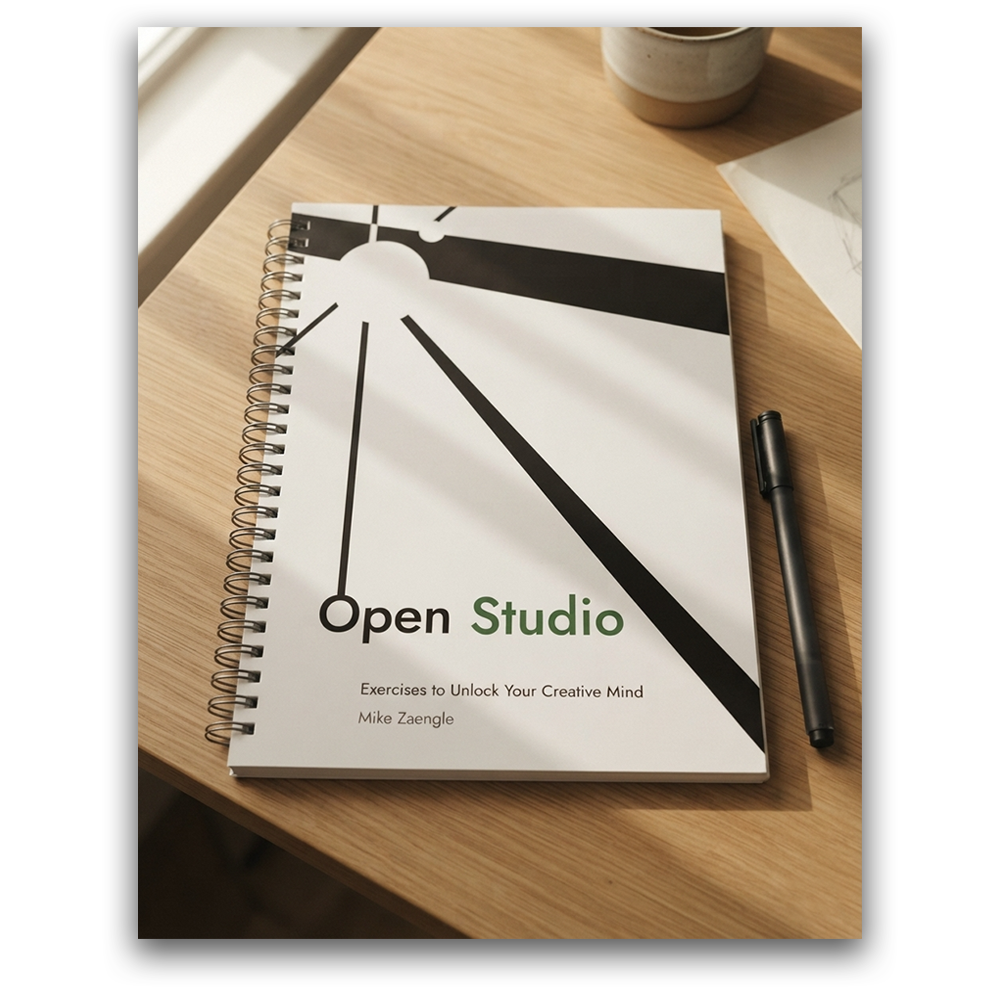
What would you do with a more creative mind?
Open Studio is a workbook of creative exercises for designers, makers, architects, writers, and anyone who wants to think more creatively but doesn't know where to start. Six chapters. Thirty exercises.
Something you do, not just read.
Why this book exists
I'm a designer. For over a decade I've worked across industrial design, digital products, UX, and architecture. I cofounded two startups, shipped work I was proud of, and during all of it had what I'd now call a studio mind: always noticing, connecting, turning problems sideways to see what else they might be.
Then came a stretch that a lot of designers know well. The work was steady and the briefs were clear, but something slowly went quiet. Not dramatically but a gradual narrowing I didn't notice until I looked back and realized how wide the road used to be.
I searched for a book that could help — not a theory book or a motivational read, but something I could actually do. Something that would train those creative muscles back into use. I didn't find it. So I made it.
What’s inside
Six chapters · Thirty exercises. The chapters build on each other. Start at one and work forward. Come back to it however you like.
Exercises range from four to six per chapter and get progressively harder. The ones that stop you can be the most useful exercises in the book,
-
Train the eye to find pattern, form, and meaning where others see noise. You'll look at shapes twice, finish what's been left half-done, and distill an idea down to its fewest possible marks.
-
Learn to read color not just aesthetically, but structurally — what it carries, what it costs, and how it changes everything around it.
-
The first idea is rarely the best one. It's just the most familiar. These exercises help you get past it — fast, strange, and further than you'd go alone.
-
Item descriptionHow to read work honestly, give notes that actually help, and steelman an idea you disagree with. The hardest creative skill, and the most useful.
-
Put visual ideas into precise language. Write a brief. Pitch by analogy. Make the invisible concrete enough to build from.
-
What blocks you. What unlocks you. What you make when no one is watching — and what that tells you about how you actually think.
Something you do, not just read
What it is
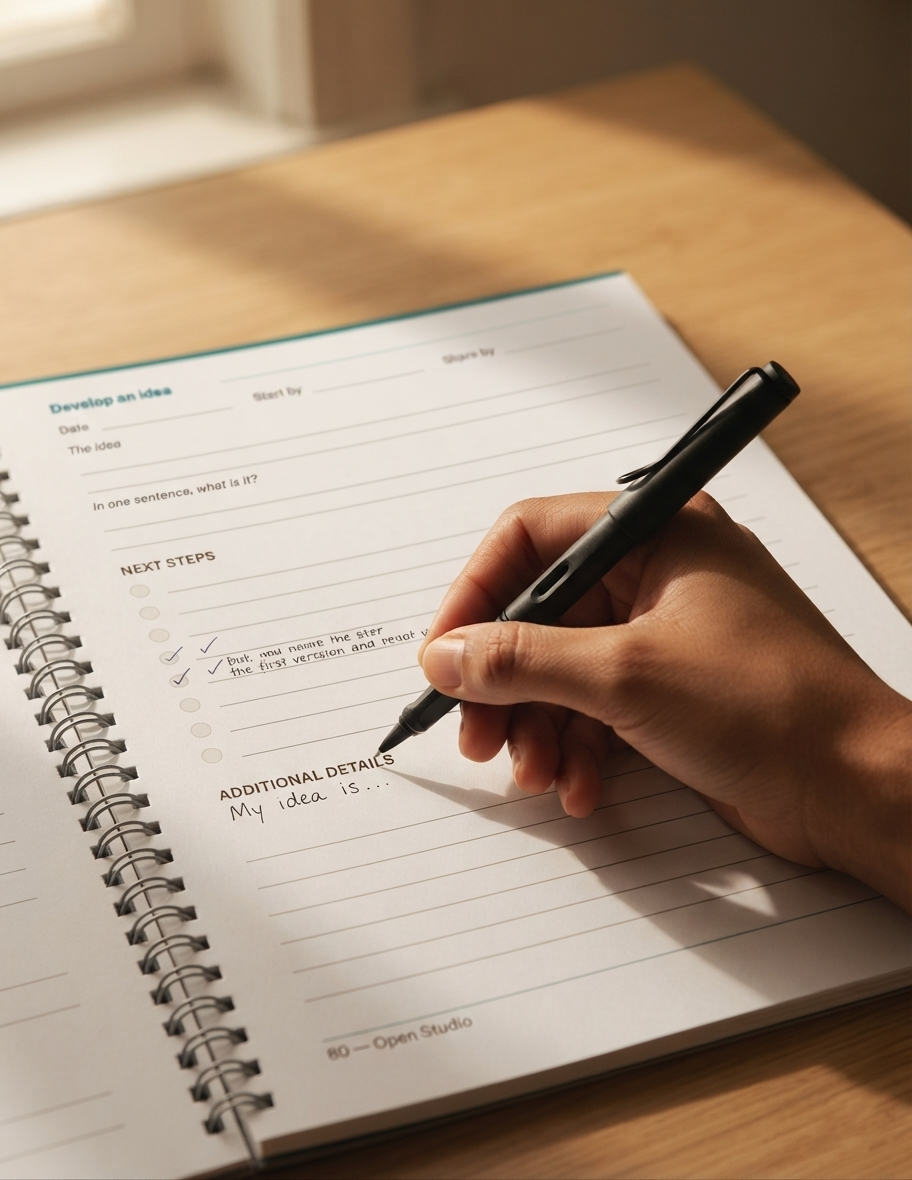
A set of exercises for the creative mind. Designed to be used flat on a desk, pen in hand, with no pressure to perform and no correct answers waiting at the back. You don't have to be a professional creative. You just have to be someone who makes things, or wants to and feels like that capacity has gotten smaller than it used to be.
What it isn’t
A course, a system, a productivity tool, a guarantee, or a quick fix. The messier your copy of this book, the more honestly you've used it.
DESIGNER'S NOTEThe ones you skip are worth noticing. They're usually the ones that would have taught you the most.
Made to be used, not displayed.
8.5 × 11 inches · Wire-o bound · 93 pages
Designed to lay flat on a desk.
Pro tip: Use a pen, not a pencil. Committing to a mark is part of the exercise. The ability to erase is also the ability to avoid.

About the author
Mike Zaengle is a senior UX/UI designer and architect based in Sacramento, CA. He spent over a decade designing digital products, cofounded two sustainability startups, and has led design on shipped work across a range of industries.
Open Studio is the book he needed and couldn't find.